Explore Atrinik’s isometric islands, ruins, and crystal-lit mysteries with other players. The maintained Classic release is available for Windows; the replacement game remains in development.
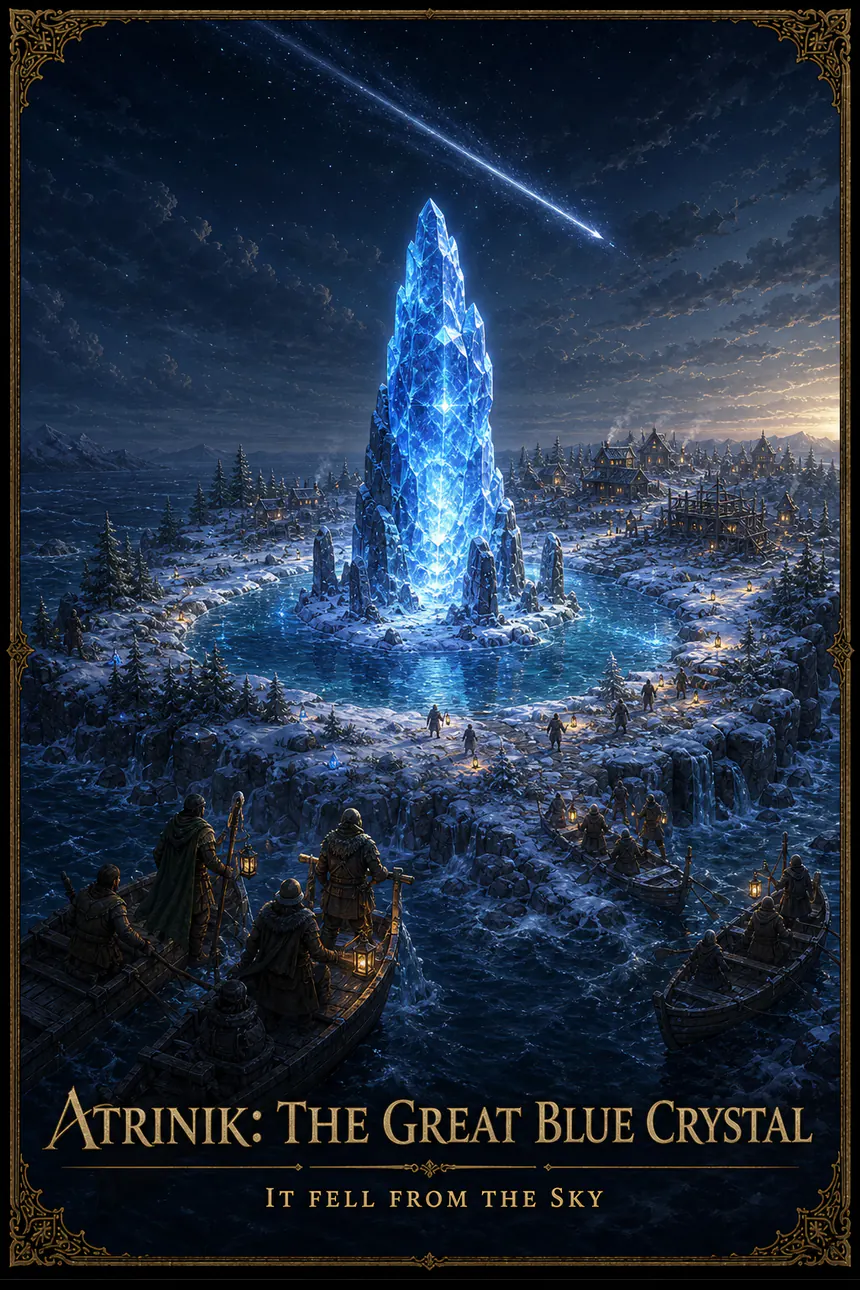
MorlianaThe Great Blue Crystal · temporary concept artwork made by Zoey Rose with OpenAI image generation
How Atrinik is made
Human creativity at the heart of the world. Agent-driven software beneath it.
Human craft gives the world its character. Agentic engineering builds and maintains the software that brings that work to life.
Human creators direct the game world
Human creators direct Atrinik's game world. Generated visual and audio assets are not accepted as final content; clearly identified temporary design drop-ins may be used until human-created replacements are found or made. For maps, quests, dialogue, and lore, generative tools may help a content creator shape terrain or develop writing; the creator directs and reviews the result. Repository owners are auditing the existing corpus before making a blanket authorship claim.
Atrinik contributors and appropriately licensed work from Crossfire, Daimonin, and other human creators retain their exact credit and terms; “human-led” describes creative direction and responsibility, not solely Atrinik-original work.
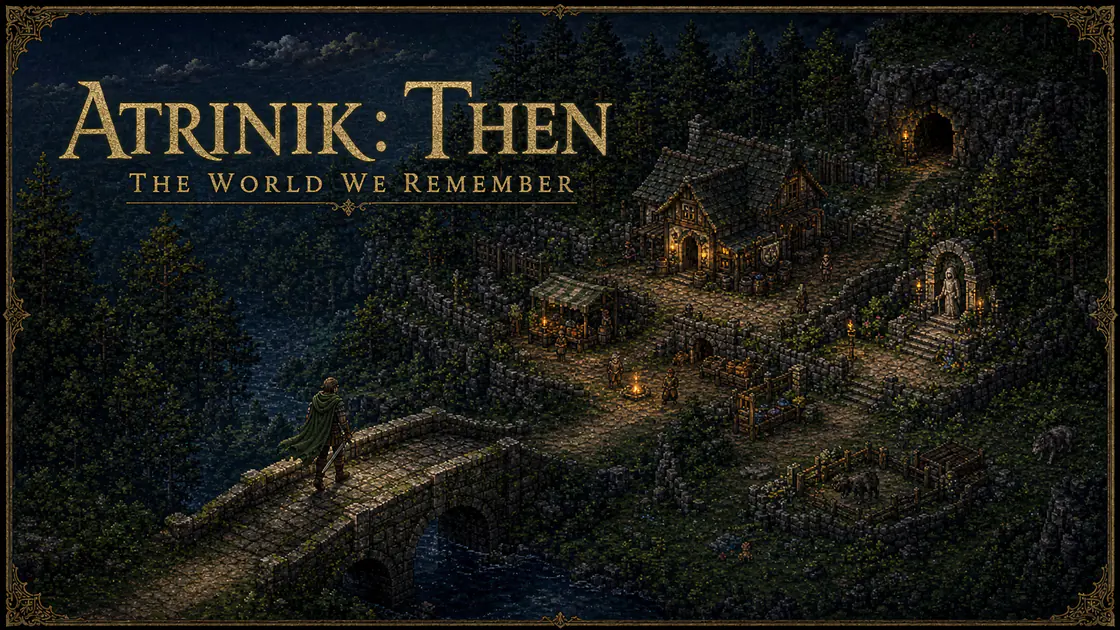
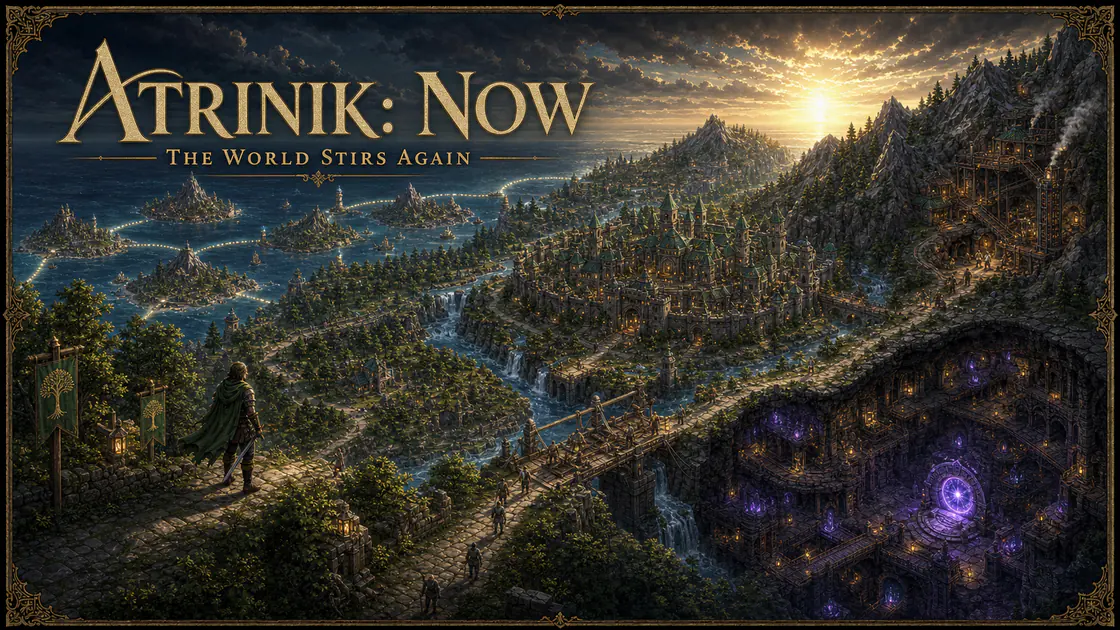
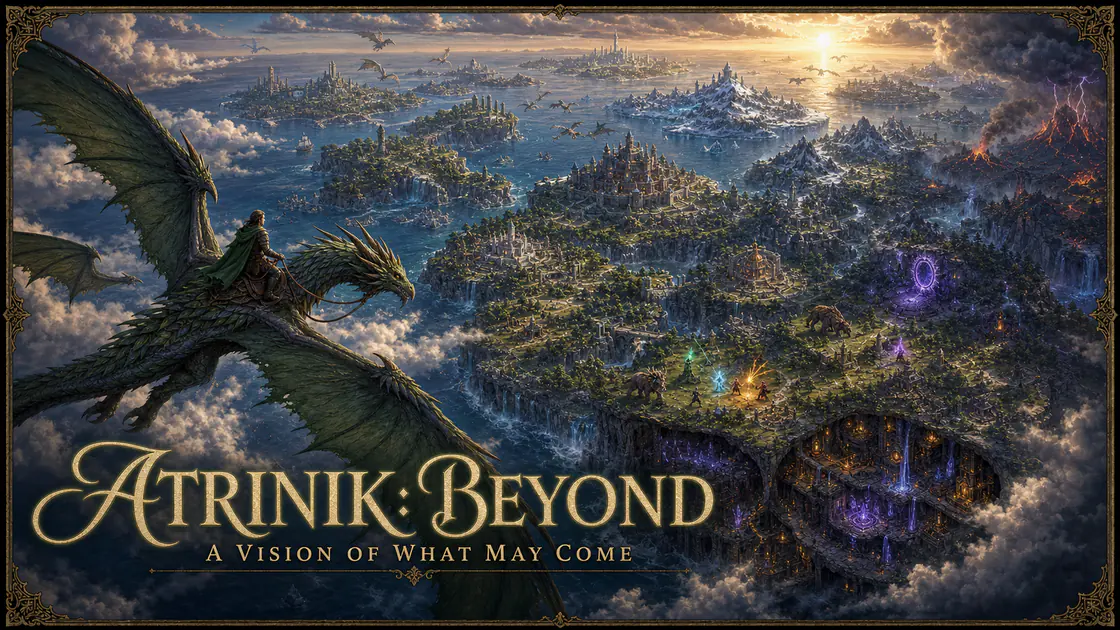
Temporary generated artwork: The four generated website concept images are not game content. They remain explicitly recorded and credited as temporary design drop-ins while suitable human-created replacements are found or made. Follow its replacement.
Software is developed primarily through Codex-driven agentic workflows under human direction, review, provenance, and validation. Direct human code contributions are welcome under the same gates.
“Generative AI” here means tools that synthesize content or code. It is unrelated to gameplay systems such as creature or NPC behavior.
In Morliana’s founding story, a blue crystal fell onto a frozen island. An expedition found it glowing with warmth amid crystals and gems, and the riches they gathered funded a village. Atrinik is full of stories like that: discoveries that become homes, and old mysteries that pull new adventurers onward.
Classic keeps the world playable today. The next-generation effort is building MIT foundations with evidence-gated provenance for tomorrow. They are distinct implementations with clear licenses and compatibility boundaries.
Path IPlayable
Atrinik Classic
The maintained GPL-licensed game: one atrinik/classic repository coordinates the C17 client, server, editor, libatrinik, protocol, version, release notes, and release artifacts.
Fresh MIT engine foundations: a Go server, Rust client and editor, shared renderer, new protocol, and content toolkit, developed as independently released repositories.
Three temporary OpenAI-generated concept-art chapters for a project carrying its history forward without pretending the future has already arrived. They are website presentation media, not game content.
I
The world we remember
The Classic line preserves Atrinik’s isometric world, its long history, and the adventures that first gave the islands their life.
II
The world stirs again
Today, Classic remains the playable home while new foundations are built with evidence-gated provenance, tested openly, and joined with care.
III
A vision of what may come
The next generation is a direction, not a release promise: fresh engine foundations shaped around the same authored world.
Built in the open
The world is open. So is the work.
Atrinik's software is developed in public, primarily through Codex-driven agentic workflows. Direct human code contributions are welcome under the same review, provenance, licensing, and validation gates. Classic has one coordinated home; provenance-reviewed MIT replacement foundations live in focused repositories.